Staying active and independent in later life comes down to a small number of practical things: a home that still works for you, a reason to leave it most days, and a body that keeps its balance. None of these happen by accident, and none of them require a grand plan. They are decisions made early enough to be useful, and revisited as circumstances change.
In Luxembourg, families often start these conversations later than they need to, usually after a fall or a hospital stay. Starting earlier makes the choices wider and the transitions gentler.
What does staying independent actually require?
Independence is rarely one big decision. It is a set of small arrangements that hold together: a bathroom you can use without fear, a route to the shops you know well, a person to call, and a reason to get up. Remove any one of them and the others start to strain.
The practical starting point is the home. Doorways, stairs, lighting and floor surfaces decide more about daily freedom than any medical measure. A handrail fitted while it is still optional is worth more than one fitted after a fracture.
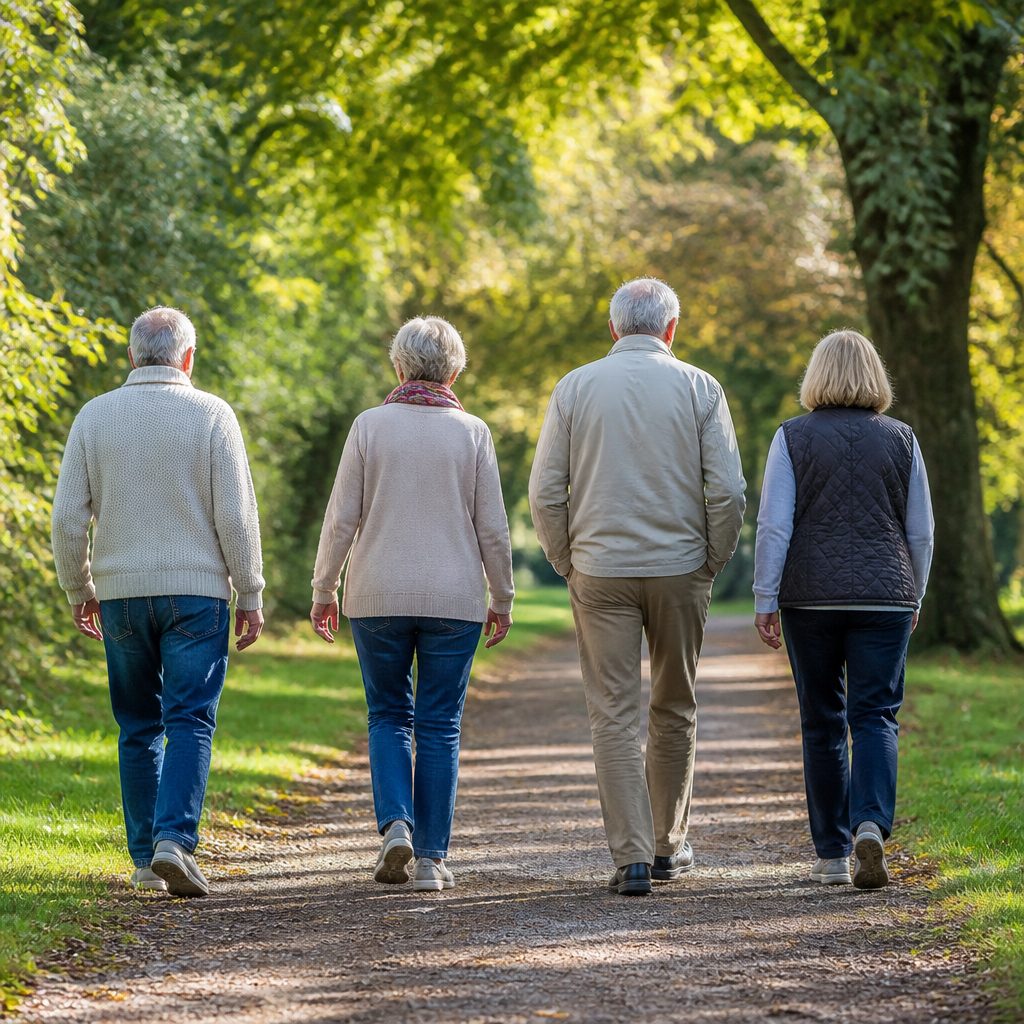
The second requirement is movement. Muscle strength and balance decline quietly, and the decline is faster when sitting replaces walking. A daily walk of twenty minutes, on a route with a bench halfway, maintains more than the legs. It maintains the habit.
The third is information. Knowing what exists, who to ask and what a service actually covers removes a great deal of avoidable worry. For French-speaking families in Luxembourg, much of this practical ground is set out in one place, and a useful starting point is this guide to ageing well in Luxembourg, which covers housing, activities and the official statistics in plain terms.
How do families in Luxembourg approach housing choices?
Housing is where most families begin, and where most of the anxiety sits. The options in Luxembourg run from staying put with adaptations, through serviced residences, to structures with nursing care on site. The right answer depends less on age than on what the person can still manage alone.
Before choosing, it helps to check a short list. Can the person leave the building without help? Is there a lift, and does it work? How far is the nearest pharmacy, and how is it reached in winter? What is included in the monthly charge, and what is billed separately? Who decides when care needs increase, and can that decision be reviewed?
A visit at a mealtime tells you more than a brochure. So does a second visit on a different day of the week. Ask residents, not only staff, how they spend an ordinary afternoon.
Adapting the existing home is often the cheapest and least disruptive route. Grab rails, a shower seat, better lighting on the stairs and a clear path from bed to bathroom cover most of the common accidents. These are modest changes, and they buy time.
What keeps everyday movement going?
Movement survives on routine, not on enthusiasm. The people who keep walking into their eighties are usually the ones who never stopped, and who built the walk into something they already do: the paper, the market, the dog, the grandchild's school gate.
Three things matter more than distance. First, standing on one leg while holding a worktop, a few times a day, trains the balance that prevents falls. Second, getting up from a chair without using the arms, repeated five times, trains the legs. Third, walking on uneven ground, such as a gravel path or a park edge, trains the small corrections that keep you upright.
None of this needs equipment or a gym. It needs to be attached to something already in the day, so that it happens on the days you do not feel like it.
Pain is not a reason to stop moving, but it is a reason to change how. If a knee complains on stairs, use the rail and take one step at a time. If the back complains after sitting, stand and walk before it stiffens further. Movement within comfort, repeated, beats a single ambitious session.
Which activities build connection rather than just filling time?
Loneliness does more damage to daily function than most people expect, and it is the quietest of the risks. The remedy is not a busy diary. It is two or three regular commitments with other people, at fixed times, that would be noticed if you missed them.
In Luxembourg, the practical route is usually local. Communal associations, sports clubs for older adults, music groups, allotments and parish or municipal activities all run on the same principle: the same people, the same day, the same hour. That repetition is what turns an activity into a relationship.
Choosing well means asking what you want from it. Company, structure, purpose and physical effort are four different needs, and one activity rarely meets all four. Two activities, chosen for different reasons, usually work better than one that is asked to do everything.
Transmission is the other half of this. Recording where you lived, what you cooked, who you knew and how the town changed gives the activity a point beyond the hour itself. A notebook, a set of photographs, a few recipes written down: these are modest objects, and they hold a family's history together.
How do you read the numbers without being misled?
Statistics about ageing are easy to misread, and they are quoted often. The figures published by STATEC, the Luxembourg national statistics institute, describe a population, not a person. A rising average age says nothing about what any individual can do next year.
It helps to separate three things. A figure is a measurement. A source is where the measurement came from and how it was collected. A course of action is what you decide to do. Confusing the three leads to decisions made on the wrong grounds.
When you meet a number about older people in Luxembourg, ask what is being counted, over what period, and by whom. Ask whether it is a snapshot or a trend. Ask whether the definition of the group has changed between years, because a change in definition can look like a change in the world.
Used carefully, the figures are useful for planning: how many places exist, how waiting lists move, where services are concentrated. They are not useful for predicting an individual's future, and they should never be used to close a conversation about what someone can still do.
What should families arrange before it is needed?
The most useful preparations are dull, and they are best done while nothing is urgent. A written list of medications, kept current. The name and number of a GP, a pharmacist and one neighbour. A clear answer to who is called first, and who is called second.
Then the legal and financial basics: a bank mandate, a power of attorney where it applies, and a folder, physical or digital, that a relative could find in ten minutes. Knowing where the papers are is half of the help.
Finally, agree on a review. Once or twice a year, sit down and ask the same questions again. Can the person still manage the stairs? Is the walk to the shops still comfortable? Has anything changed in the last six months that the family has not discussed?
Independence in later life is not a state you reach and then keep. It is maintained, in small increments, by ordinary decisions about housing, movement, company and information. Made early, those decisions are cheap. Made late, they are still possible, but the options are fewer and the pressure is greater.