The ordinary hours are what your back actually notices
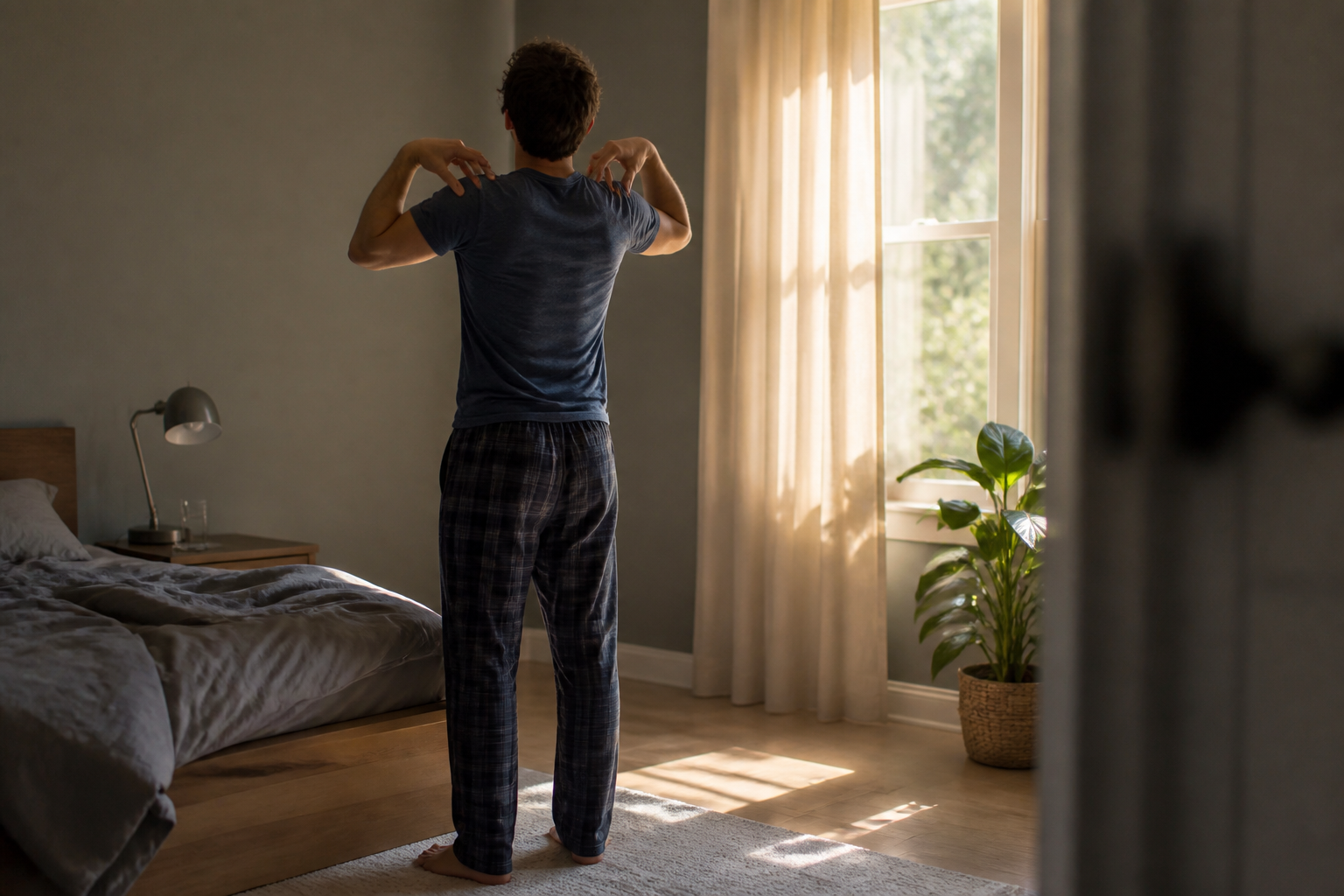
Not the gym, not the mattress advert. The eleven hours between the kettle and the sofa, and the small adjustments that quietly change how those hours land.
Upright Notes reads the NHS pages, the ergonomics research and the exercise sheets that clinicians hand out, then writes them up in plain English for people with normal desks, normal gardens and normal knees. Everything here is general reading, never a substitute for seeing someone qualified.
A daily dog walk is low-intensity movement repeated most days, which is exactly the kind of load a stiff back tends to tolerate well. How to make the miles count, and when the dog sets the pace.
Size, pull and health screening matter more when the person holding the lead has a fragile back. What to weigh up before choosing a dog, and where joint scores are published.
An adult rescue dog can be calm indoors and still pull like a train outside. What a large dog's lead manners ask of a back, and how the first weeks usually go.
Collies, shepherds and other working breeds need real daily exercise, which quietly drags their owners into the healthiest routine of the week. The checks behind the energy.
Borrowing or boarding a herding breed carries one question most people never think to ask. The MDR1 mutation, the drugs it affects, and what a dog-sitter should know.
Worming, grooming, lifting food sacks and the rest of the dog's admin: small physical tasks that add up across a week, plus the one safety check some breeds need first.
Shelter volunteering is real work: walking strong dogs, lifting food sacks, hosing runs. How to pace a shift so the dogs get the help and your back survives the kindness.
The questions that matter before choosing a puppy are about tests, temperament and workload, not colour. What health paperwork to ask for, and what a white coat does and does not mean.
Reading under bad light is a slow route to a sore neck and a poor night's sleep. What the light over your shoulder should do, and what the last hour before bed is for.
Homebrewing, and hobbies like it, quietly involve lifting demijohns, fermenters and crates. Where the heavy kit should live, how to lift without the twist, and when to split the load.
Seasonal digging is a known trigger for weekend back trouble. How much work a small plot really involves, and how to spread it across days rather than doing it all at once.
Getting a copy of your own medical records in the UK is a right, not a favour. How a subject access request works, and how other systems publish the rules for their documents.
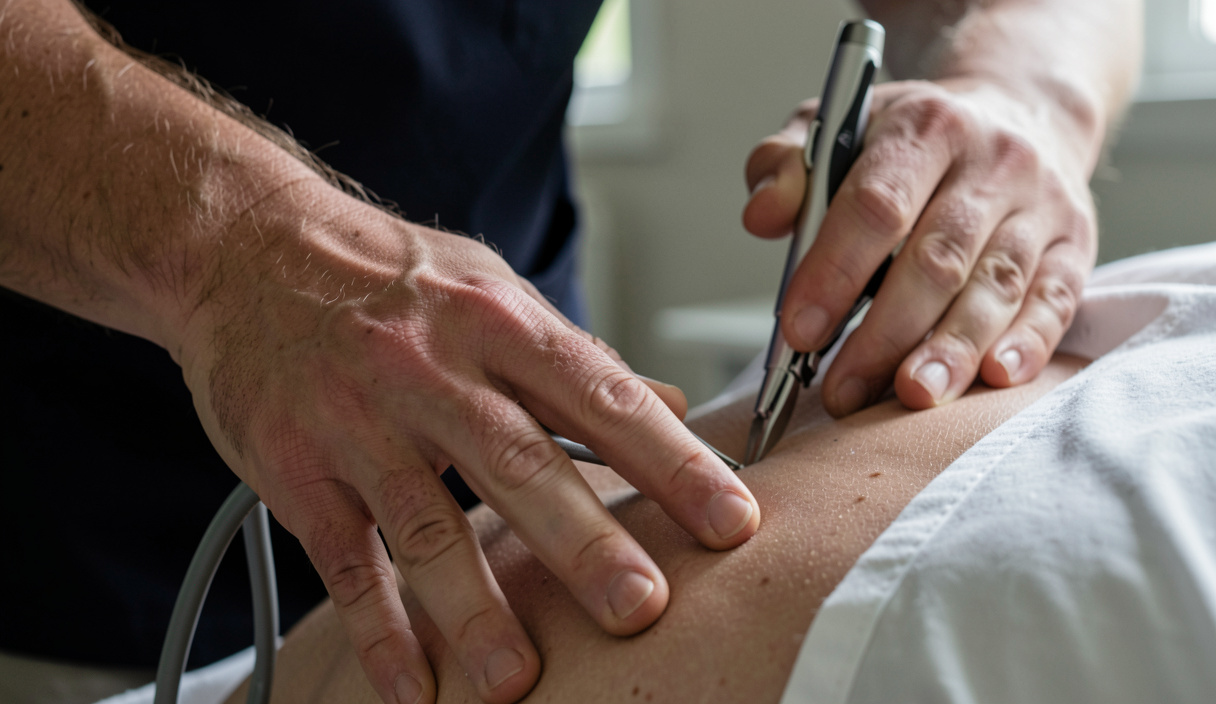
For British readers used to osteopathy and the GP, a look at how the Dutch organise physiotherapy: the BIG register, the insurance decree, the complaints route, and what reviews say about dry needling and tape.
Photography turns an ordinary walk into an outing with a purpose, which is what gets a stiff back out of the house. What carrying kit asks of you, and how to keep it light.
Swapping the car seat for a bike saddle changes what a working day does to your back. The posture question, the bike fit question, and the cases where riding makes things worse.
Rebuilding a movement habit after back trouble is a matter of gradual increases and honest red flags. From walking to a light jog, what to add each week and what to stop for.
The golf swing is a fast, repeated rotation with a bent spine at the top. What it loads, why more range balls can make a sore back worse, and when a golfer should stop and get looked at.
Muay thai, kickboxing and K-1 pack rotation and clinch wrestling into short rounds. What that does to a lower back, how the rules bound the exposure, and when to stop for the week.
How an inherited eye condition changes a collie's daily life outdoors, and how walking, light and routine can adapt around a dog whose sight is changing.
Hip dysplasia in shepherd breeds asks a lot of the dog and of the owner's back. A plain look at daily walks, lifting a large dog and protecting your spine.
How adult, paediatric and neonatal breathing circuits differ, why heated wire circuits still collect condensation, and how a circle system clears carbon
§ 02
What this site is, and what it is not
Upright Notes is a publication, not a practice. Nobody here examines anyone, takes bookings or has an opinion about your particular shoulder.
The aim is narrow and useful: take the guidance that already exists, from the NHS, from NICE, from the professional registers and from decent ergonomics research, and turn it into something a person can act on before their next meeting. Where the evidence is thin, the page says so. Where a symptom needs a real appointment, the page says that too, loudly.
Every article carries the date it was last checked. Older pages are revisited rather than quietly left to rot, because guidance on backs has changed a great deal in twenty years and a page written in 2015 can be confidently wrong.
Personal advice on your symptoms, however politely you ask.
Recommendations for a named clinic or practitioner.
Miracle posture devices with an affiliate link attached.
Anyone here claiming a protected clinical title.
§ 03
One change, this week
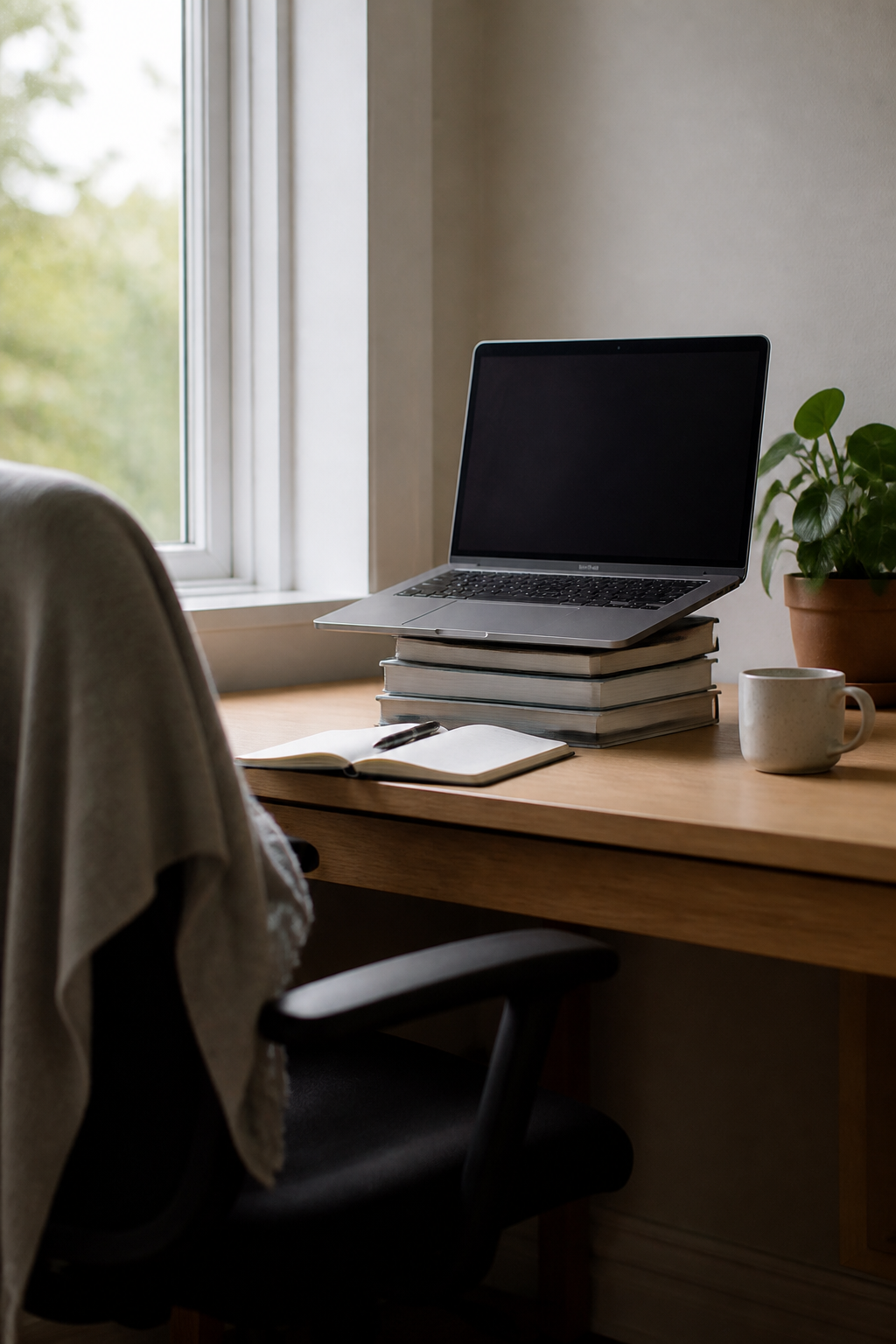
The cheapest ergonomic upgrade in Britain is a stack of hardbacks and a separate keyboard.
Raise the screen, drop the shoulders
Most laptop pain is a geometry problem. The screen sits low, the head drifts forward to meet it, and the muscles along the back of the neck spend eight hours holding a bowling ball at arm's length. The fix costs nothing if you own books.
Lift the screen until the top line of text sits roughly level with your eyebrows.
Add a separate keyboard and mouse, so your hands can stay low while the screen stays high.
Pull the chair in far enough that your forearms rest without reaching forward.
Set an alarm for every forty minutes and stand up for the length of one kettle boil.
Back pain with numbness around the back passage or genitals, loss of bladder or bowel control, a fever, unexplained weight loss, or pain following a serious fall is not something to research. In the UK, contact your GP or call NHS 111 straight away, and 999 if symptoms are severe or come on suddenly.
Readers who want to understand how rest, breathing and slow movement affect a tired back can turn to the sleep and relaxation magazine, which sets out evening rituals, quiet breathing and gentle practices in plain French.
A Japanese editorial journal on infection control in shops and workplaces sets out basic policy, staff health and ventilation in plain terms, and its basic infection control for shops pages sit alongside a dated record of the Gunma certification scheme.
For readers who also keep an eye on the spaces they work in, an independent magazine covers the small business infection control plan, ventilation, cleaning and return-to-work questions in plain English, with named sources.
For readers curious about the posture taken on the cushion, The Paperbark Journal explains breath meditation for a complete beginner in the Theravada tradition, alongside the teachings and temple calendar of the Queensland Thai community.
For readers who want to understand what a silent retreat involves before committing to one, an independent guide documents the retreat-house tradition and its contemplative practices in plain, unhurried prose, with a silent retreat what to expect account of preparation, silence and the shape of a residential weekend.