Plenty of hobbies weigh more than they look. A full demijohn, a fermenter of wort or a crate of bottles is twenty kilos of awkward liquid that has to move floor to bench and back again. The back that complains on Monday was often earned on a hobby Saturday.
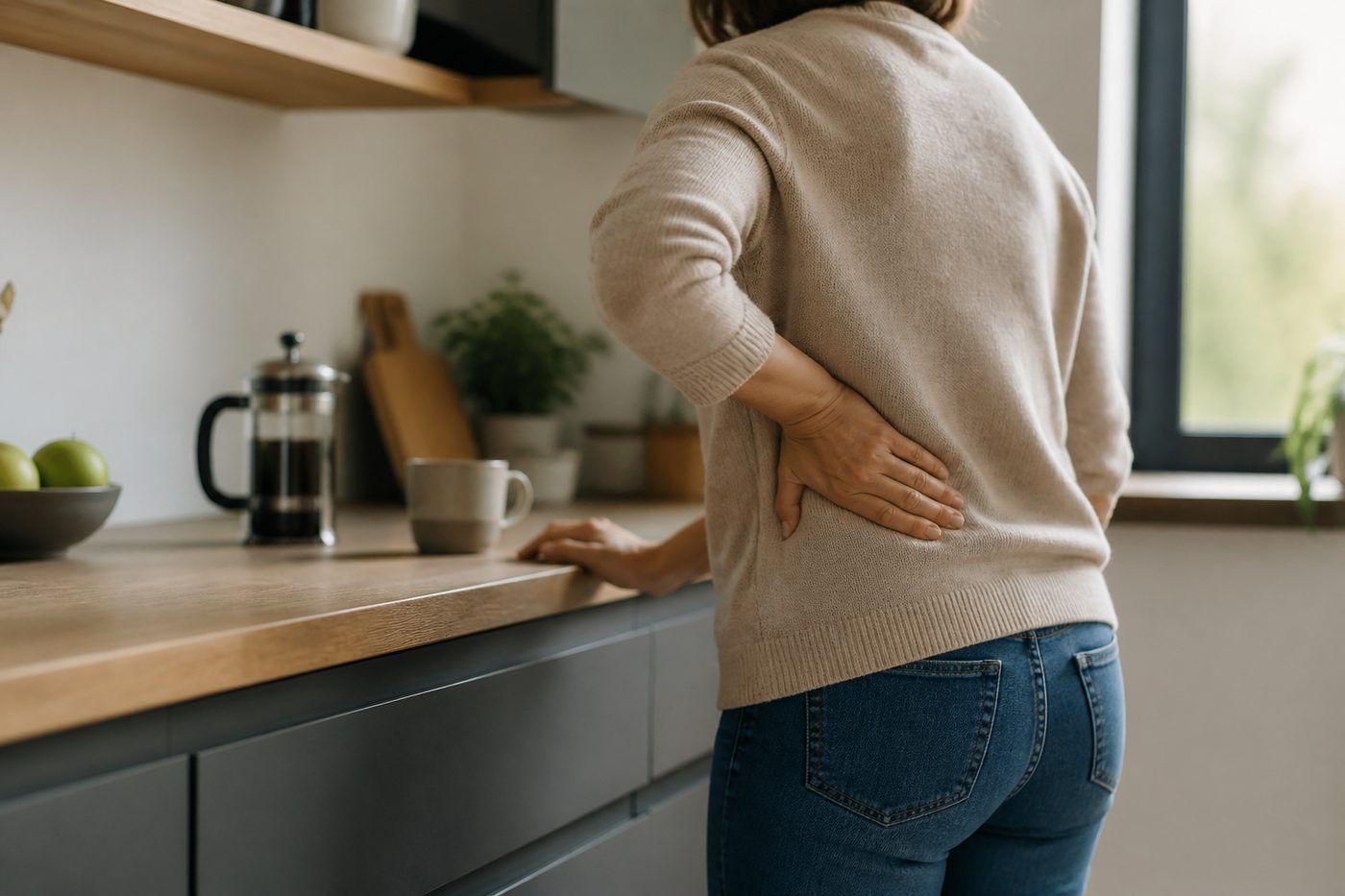
How heavy is a full demijohn or fermenter in real terms?
A five-gallon glass demijohn holds about nineteen litres, so call it twenty kilos before the glass itself. A plastic fermenter of the same size is similar. Home brewing vessels of exactly this kind are the subject of an English magazine that walks through kits, racking and bottle conditioning, which is where these lifts actually happen.
That is manual-handling weight, the sort workplaces are told to plan around, arriving in a hobby that never thinks of itself as lifting.
Which lifting habits protect your back on a hobby day?
Three do most of the work. Keep the vessel close to the body rather than at arm's length; lift with a straight back by bending the knees; and never lift and twist in one movement, which is the combination most likely to hurt. Move the feet instead.
Split the load where the task allows: siphon rather than lift, rack in halves, bottle from a table-height fermenter rather than from the floor.
Where in the house should heavy fermenting vessels live?
At bench height if they are full, on the floor if they are empty, and never on a shelf that needs a stepladder. The lift that injures is the awkward one: the high shelf, the stairs, the car boot.
HSE's pages on back pain and manual handling set out the same rules for workplaces, and they apply unchanged to a shed or a spare room.
When does a hobby need a second pair of hands?
When the lift is a guess. If moving the full vessel feels like a question mark, that is the answer: split the batch, get a hand, or wait.
The quieter version of the same evening is in the lamp by the sofa, where the load is light rather than kilos.