A stiff neck after an evening's reading is usually a lighting problem, not a posture problem. The head drifts toward whatever light exists, and if that light is dim, distant or in the wrong place, the neck pays for the book.
Can bad lighting really give you a stiff neck?
Indirectly, yes. Eyes pull the head toward the print; weak light pulls the head down and forward; the muscles at the base of the skull then hold that shape for the length of a chapter. Twenty minutes in that posture is a stiff morning the next day.
The fix is positional, not medical: bring the light to the book rather than the neck to the light. A lamp behind and above the shoulder, aimed at the page, keeps the head where it belongs.
What light suits the hour before bed?
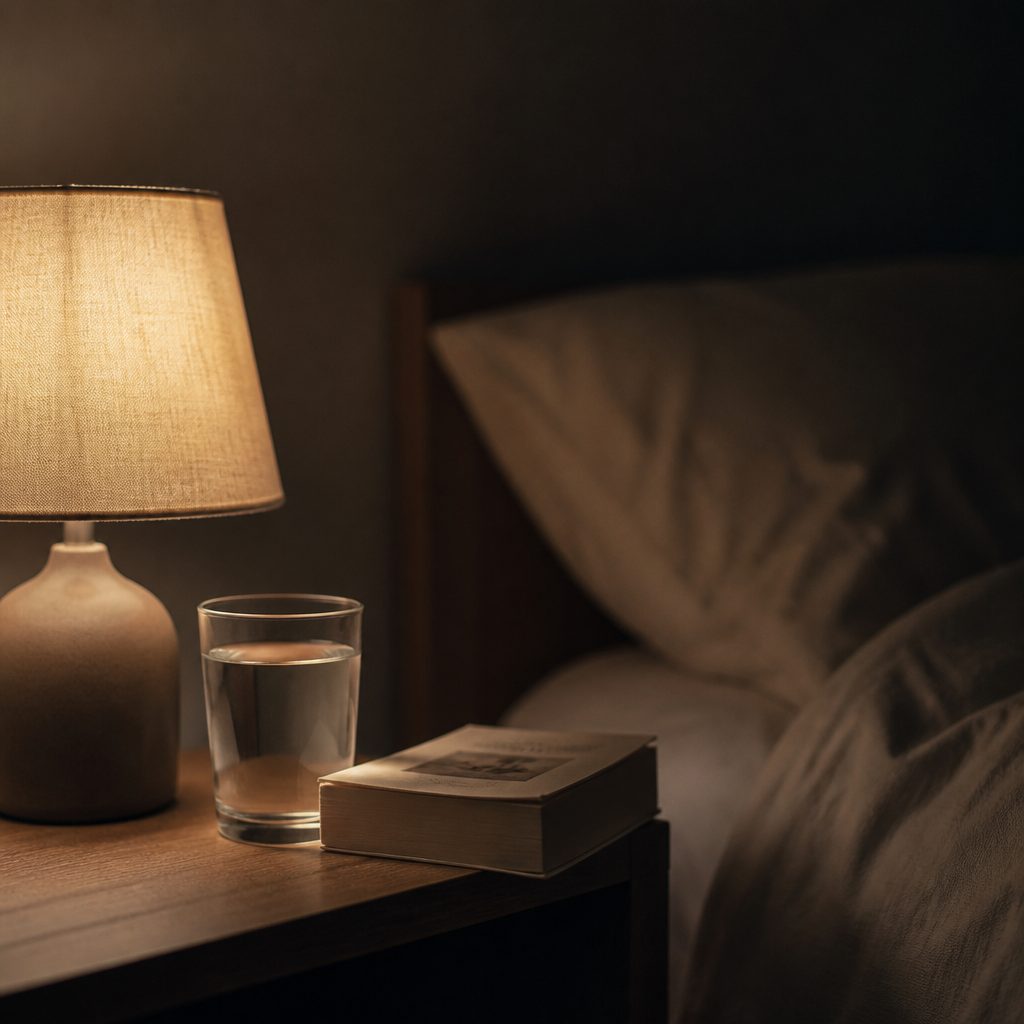
Warm and low. A guide to practical home lighting covers lumens, the kelvin scale and where a reading lamp actually belongs in a room, which translates directly: a bright cool overhead is wrong for reading and wrong for winding down, a shaded warm lamp beside the chair is right for both.
The NHS advice on sleep makes the same point from the other end: dimmer light in the last hour is part of how the body gets the message that the day is ending.
How do you set up a reading spot that lasts?
Chair with support, lamp above the shoulder on the side opposite your dominant hand, book raised on a cushion rather than resting in the lap. The head stays level, the page stays lit, and the neck forgets the whole arrangement, which is the aim.
If your evenings end with a stiff neck anyway, our guide to waking with a stiff neck covers the overnight half of the same problem.
When does light become a sleep problem?
When the last hour is lit like an office. Bright overheads and bright screens in the hour before bed work against the wind-down, whatever the neck is doing. The lamp that is good for the chapter is good for the transition after it.
If pain rather than light is what keeps you up, sleeping with chronic pain covers the night side of the problem.
Sources
For the sleep side of evening light, see the NHS page on insomnia.