
Waking with a neck that will only turn one way is one of the more alarming ordinary experiences the body offers. It arrives without warning, often after a night that felt entirely normal, and for the first hour it can feel as though something has genuinely gone wrong.
In the great majority of cases nothing has. Acute neck stiffness of this kind, sometimes called a wry neck, settles on its own within a few days to a couple of weeks, and what happens in the first hour makes a noticeable difference to how those days go.
What has actually happened overnight
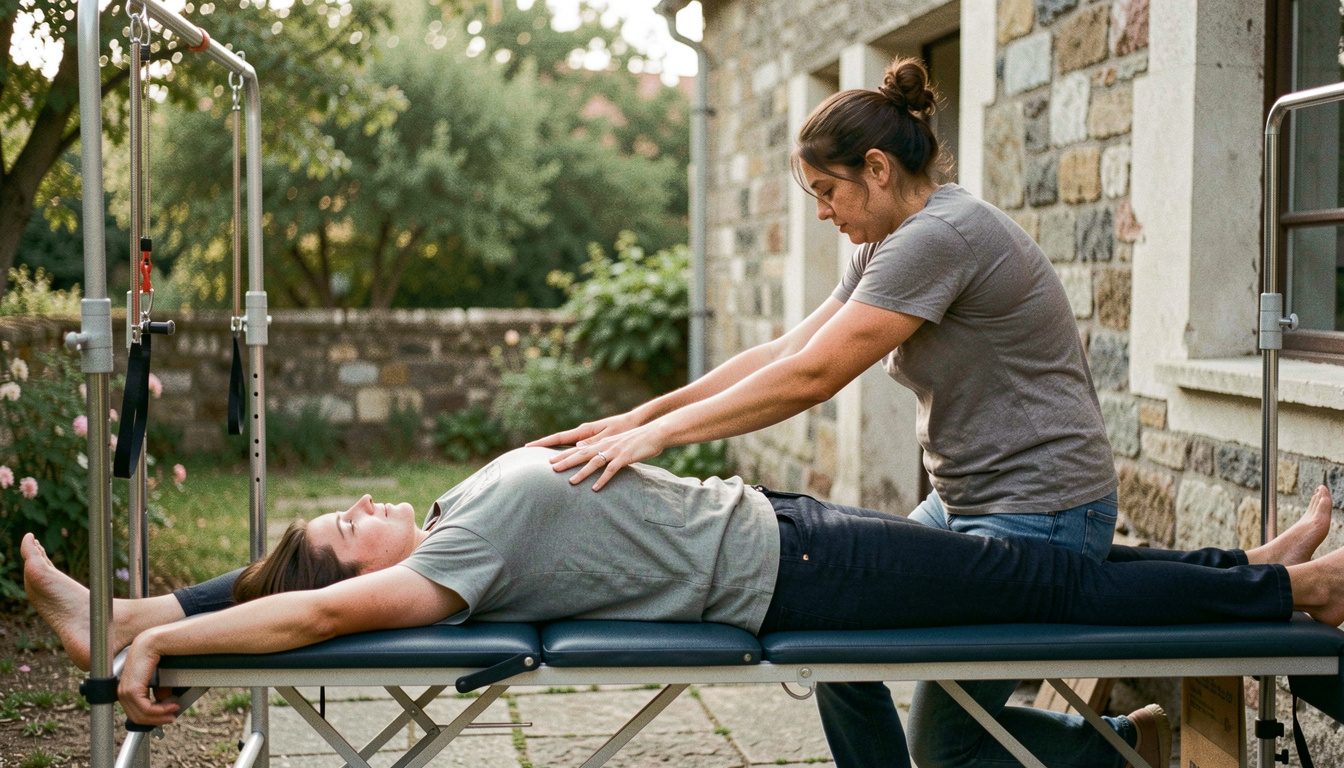
Usually nothing dramatic. The neck has spent seven hours at the end of its available range, often because a pillow was the wrong height or slipped, and the joints and muscles have responded with protective guarding. Sleeping in a cold draught can do it. So can a day of unusual work, a heavy bag on one shoulder, or a long drive with the head turned. Occasionally there is no identifiable cause at all, which is normal and not a sign that something has been missed.
What it is not, almost always, is a bone out of place. Nothing slips out overnight and nothing needs to be put back. That framing matters, because fear of movement is the single biggest reason a two day problem becomes a two week one.
The neck is guarding, not broken. Guarding responds to gentle movement and to warmth, and it responds badly to being left completely still.
The first hour
- Warmth first. A hot shower with the water on the back of the neck, a heat pack or a covered hot water bottle for fifteen minutes. Heat eases muscle guarding better than anything else available at home.
- Move it gently, early. Small movements within the comfortable range, repeated often, from the first hour. Waiting until it feels ready is the mistake that extends the whole episode.
- Consider a painkiller if suitable, so that gentle movement is possible. A pharmacist can advise on what is appropriate.
- Carry on with the day, adjusted rather than cancelled. Neck pain behaves like back pain: it settles faster in people who keep moving.
- Do not use a collar. Soft collars are no longer recommended for ordinary neck pain, because immobilising the neck makes stiffness worse rather than better.
Four stretches for a stiff morning neck

All four are done sitting, slowly, and within a range that feels like a stretch rather than a warning. If a movement produces sharp pain or pins and needles down an arm, stop that one.
- Rotation, in small doses. Turn the head slowly towards the stiff side as far as is comfortable, hold two seconds, return. Ten repetitions, several times a day. Do not force past the point where the shoulder starts to come with it.
- Side bend. Ear towards the shoulder, holding the seat of the chair with the opposite hand to keep that shoulder down. Twenty seconds each side, easy side first.
- Chin nods. Draw the chin gently back and slightly down, making a small double chin, hold five seconds. Ten repetitions. This one targets the deep neck flexors and is often the most useful of the four.
- Levator stretch. Turn the head about forty five degrees, look down towards the armpit, and guide gently with the hand on the back of the head. Twenty seconds each side. It reaches the muscle running from the neck to the top corner of the shoulder blade, which is frequently the sore spot people are actually feeling.
Shoulder rolls between all of them, ten backwards, help more than they sound as though they should. Little and often beats one long session, and four or five short rounds through the day is the usual pattern.
How long it takes to settle
- First 48 hours
- Usually the worst. Movement limited in one or two directions, often with a pull into the shoulder blade.
- Days three to seven
- Steady improvement in most people, with rotation returning first and the last few degrees taking longest.
- Two to four weeks
- The outer edge of a normal recovery for ordinary neck pain, particularly if it was severe at the start.
- Worth a GP appointment
- No improvement at all after a week, or symptoms spreading down an arm rather than settling.
The pillow question
A pillow that is the wrong height for the usual sleeping position is the most common preventable cause. The aim is to keep the head in line with the spine rather than propped up or dropped.
Side sleepers need enough pillow to fill the gap between the ear and the outside of the shoulder, which for many people means more than they are using. Back sleepers need much less, and a thick pillow pushes the chin down towards the chest all night. Front sleepers need almost none, and front sleeping is the position most likely to produce this problem in the first place because the neck spends the night rotated.
Two practical checks: lie down in the normal position and have someone look from the side, or take a photograph. And notice whether the neck feels worse on waking than at bedtime, several days a week. That pattern is the clearest sign the pillow is wrong. The sleeping position guide covers pillow height alongside the rest of the bed.
If it keeps happening
An occasional stiff neck is bad luck. Once a month is a pattern, and patterns usually have a daytime cause rather than a night time one.
The usual suspects are a screen that sits off to one side, a laptop used without a stand, hours spent on the phone held between ear and shoulder, a bag carried on the same shoulder every day, and long periods of stillness on video calls. The screen time page covers the desk faults that load the neck and shoulders, and the desk guide covers screen placement.
Endurance work helps as well. Chin nods, wall slides and shoulder blade squeezes, two or three times a week, build tolerance in the muscles that hold the head and shoulder blade. Four to six weeks is a fair trial.
A stiff neck that is an emergency
A stiff neck with fever, severe headache, dislike of bright light, drowsiness, confusion or a rash that does not fade under a glass can indicate meningitis, and needs emergency assessment, not stretches. Also urgent: neck pain after a fall or a car accident, a sudden severe headache unlike any before, weakness or clumsiness in the hands, unsteadiness on the feet, difficulty swallowing or speaking, or numbness and weakness spreading down an arm. In the UK, contact a GP or call NHS 111 without delay, and 999 if symptoms are severe or come on suddenly. What this site can and cannot do is set out on the medical disclaimer page.
Common questions
Should the neck be rested completely?
No. Complete rest and soft collars both prolong the problem. Gentle movement within a comfortable range, started early and repeated often, is what current advice supports.
Heat or ice?
Heat suits most people better for this kind of stiffness, because the mechanism is muscle guarding. Ice is more useful after a clear knock. Neither is wrong, so comfort decides.
Is it safe to have the neck manipulated?
That is a decision for a registered clinician who has examined the person, and it belongs in a consultation rather than on a web page. Anyone considering it should know that neck manipulation carries a small risk that a practitioner is expected to explain beforehand, and that declining a specific technique is always an option. How UK manual therapy is regulated explains how to check a register.
Can a draught really cause it?
Cold exposure over a sleeping muscle is a plausible trigger for guarding, and plenty of people report the association with an open window or a fan. It is not the whole explanation, and it is a useful thing to change if it keeps happening.
Does a memory foam or contoured pillow prevent it?
Height matters far more than material. A contoured pillow at the right height suits many people, and the same pillow at the wrong height for their sleeping position causes the same problem as any other.
A crick can come from a startle as well as a pillow; a sudden yank on the lead is the same kind of jolt.
Sometimes the cause is the evening before: reading under a bad lamp sets up a stiff morning.