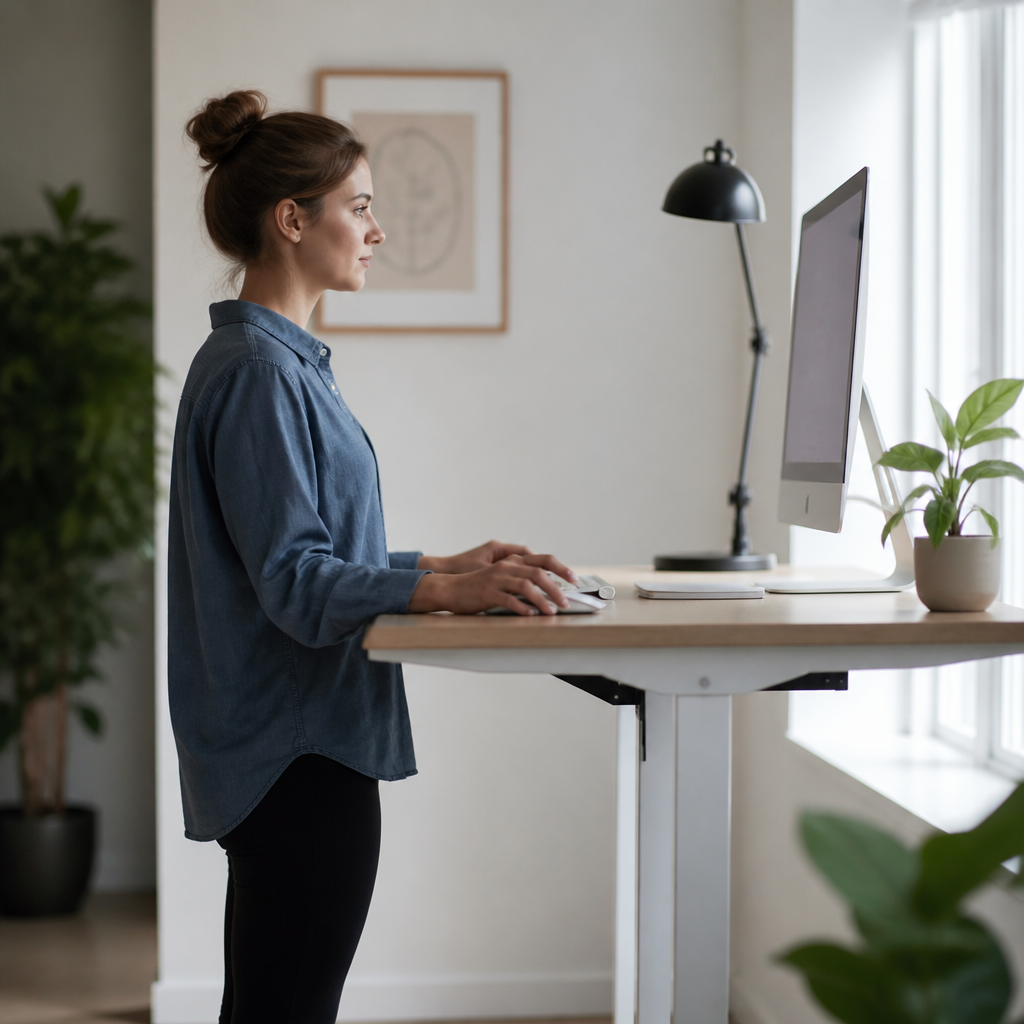
Posture is one of the few health subjects on which almost everyone has been given advice and almost nobody has been given evidence. Sit up straight. Shoulders back. Do not slouch or you will ruin your back. Most of it was handed down by a well meaning adult rather than drawn from a study, and a fair amount of it has quietly been dropped by the clinicians who used to repeat it.
This guide sets out what posture means, which signs are worth noticing, what the research actually says about the link between posture and pain, and what helps. The short version is that variety beats correctness and strength beats vigilance, which is both less romantic and considerably easier to live with.
What posture actually means
Posture is simply the position the body is held in, whether still or moving. Standing at a bus stop is static posture. Carrying shopping up a flight of stairs is dynamic posture. Both matter, and the second one is far less discussed than it deserves to be.
A healthy spine is not straight. It has three gentle curves: a forward curve at the neck, a backward curve through the upper back and ribs, and a forward curve again in the lower back. Those curves are load bearing architecture, and flattening them in pursuit of a military bearing is not an improvement.
The familiar plumb line, drawn through the ear, the point of the shoulder, the hip, just in front of the knee and just in front of the ankle bone, is a teaching aid used to describe an average. It is not a target, and healthy people vary around it enormously. Two adults with identical measured alignment can have completely different histories of pain, which is the first clue that alignment is not the whole story.
The best posture is usually the next one. Anything held for an hour becomes work, however textbook it looks.
The signs of poor posture
What people describe as poor posture is usually a handful of recognisable patterns, most of them the fingerprints of a job rather than a fault of character.
- A head that sits forward of the shoulders. Seen from the side in relaxed standing, the ear lands in front of the collar bone rather than above it.
- A rounded upper back that does not straighten easily when attention is paid to it, particularly if it has become the resting shape rather than a passing slump.
- Shoulders that creep towards the ears as the day goes on, so that by four o'clock they are being held up rather than hanging.
- An exaggerated hollow in the lower back, with the pelvis tipped forward and the ribs flared upward.
- Habitual weight on one hip when standing, always the same one, for long stretches at a time.
- The sofa slump, where the tailbone slides forward of the seat back and the lower back rounds into a C shape for the length of a film.
- An ache rather than a pain, arriving between the shoulder blades or across the base of the neck at roughly the same hour every working day.
These are descriptions, not diagnoses. A rounded upper back on a person who walks four miles a day, sleeps well and lifts the shopping without thinking about it is a shape. The same shape on a person who has been sore for six months and cannot turn their head to reverse the car is worth a conversation with a clinician.
The last sign on the list is the most useful one, because it comes with a timestamp. Pain that arrives at a predictable point in the day usually points at what happened in the hours before it rather than at anything structural.
Does poor posture cause pain?
Less directly than most people assume, and the honest answer is worth a paragraph rather than a slogan.
Researchers have spent decades looking for a clean relationship between measured posture and back or neck pain, and it keeps failing to appear. Systematic reviews of occupational sitting have not found that sitting at work, on its own, causes low back pain. Studies that photograph and measure the alignment of people with and without neck pain routinely find the two groups overlapping heavily. Plenty of people with a pronounced forward head position have never had a sore neck, and plenty of textbook alignment turns up in clinic in a great deal of discomfort.
What does track more reliably with pain is a shorter list, and every item on it can be worked on:
- Sustained load without variation. Holding any position for hours is the reliable villain, not the shape of the position.
- A sudden change in what the body is asked to do, such as a weekend of decorating after a fortnight of desk work.
- Low overall physical activity, which leaves tissue with less capacity for the demands of an ordinary week.
- Poor sleep, which lowers pain thresholds measurably and is one of the better predictors of how a painful episode goes.
- Stress and workload, which raise resting muscle tension and change how much attention pain gets.
The famous 27 kilogram claim
A widely shared figure says that tilting the head forward by sixty degrees puts twenty seven kilograms of load through the neck. It comes from a computer model published in 2014 that estimated forces, not from measurements of harm in real people, and no study has shown that phone use at that angle causes neck pain. Necks are built to tolerate load. The reasonable takeaway is to change position often, not to be frightened of looking at a screen.
How to improve posture, in order of usefulness
Ranked by how much difference each step makes for the effort it costs, rather than by how satisfying it feels.
- 1. Move more often
- Change position every twenty to thirty minutes. Standing up for the length of a kettle boil is enough to count. This single habit outperforms every attempt to hold a perfect position.
- 2. Fix the geometry
- If a chair and a screen force the body into one shape for eight hours, willpower will lose. Raise the screen, drop the keyboard, support the forearms.
- 3. Build strength
- UK Chief Medical Officers advise activity that strengthens the major muscle groups on at least two days a week, alongside 150 minutes of moderate activity. Strength is what lets a position be held without effort.
- 4. Restore the ranges you never use
- Upper back extension and hip extension are the two that desk work quietly removes, and both respond quickly to a few minutes a day.
- 5. Protect sleep
- Poor sleep and persistent pain feed each other. This is not a soft recommendation, it is one of the strongest levers available.
Notice what is not on the list: holding the shoulders back all day, tucking the chin permanently, or bracing the stomach while working. Constant self correction is exhausting, and there is no good evidence that it prevents pain. The desk changes are the ones that keep working while you are thinking about something else, which is the whole point. The home office guide works through the geometry room by room, the chair guide covers the levers most people have never touched, and the working from home page deals with the harder problem of rebuilding the movement an office used to provide for free.
The four movements that do the heavy lifting
None of these need equipment, a mat or a gym membership, and all four can be done in a kitchen in under ten minutes.
- Sit to stand. From an ordinary dining chair, stand up and sit down without using the hands. Two sets of ten. This is the single most transferable strength exercise in the house, because it is a squat that ordinary life already asks for many times a day.
- Wall slides. Stand with the back of the head, upper back and bottom against a wall, arms bent at the elbow and the backs of the hands touching the wall. Slide the arms up as far as contact can be kept, then lower. Ten slow repetitions. This is upper back extension and shoulder blade control in one movement, and most desk workers find it surprisingly hard.
- Chin nods. Sitting tall, draw the chin gently back and slightly down, as if making a small double chin, hold for five seconds and release. Ten repetitions. It trains the deep neck flexors, which fatigue quickly in people who spend the day peering at a screen.
- The hip hinge. Stand with feet hip width apart, push the hips backwards while keeping the shins near vertical and the back long, and come back up by squeezing the buttocks. Ten repetitions. This is how a full washing basket should be picked up, and practising it unloaded is what makes it available when it is needed.
Two rounds, three or four days a week, will do more for how a body carries itself than any amount of remembering to sit up straight. For the lower back specifically, a gentler starting set exists for anyone currently sore.
Braces, tape and posture apps
Posture braces do exactly what they claim in the moment: they pull the shoulders back while they are worn. What is missing is evidence that this produces a lasting change once the brace comes off, or that it reduces pain. The mechanism most likely at work is a reminder rather than a correction, and a reminder can be had for nothing.
Kinesiology tape has the same problem in a different colour. Buzzing wearables that vibrate when the upper back rounds are more interesting, because they prompt movement rather than enforce a shape, but the evidence is thin and the effect tends to fade once the novelty does.
Money spent on a screen riser, a separate keyboard or a decent pair of walking shoes buys more posture than money spent on anything worn under a shirt.
When a change in posture is worth a GP appointment
Most posture is a habit. A small amount of it is a symptom, and the difference is usually that a symptom develops rather than sits still.
- A new and progressive stoop in an older adult, particularly with a loss of height, can point to osteoporotic changes in the spine and deserves assessment.
- A sideways curve that appears or worsens noticeably in a child or teenager should be seen, since scoliosis is monitored differently depending on age and growth.
- Stiffness that is worst in the morning, lasts more than half an hour, improves with movement rather than rest and has been present for months has a different explanation from desk fatigue. The morning stiffness page sets out the pattern and the referral criteria.
- Any posture change accompanied by weakness, numbness, unsteadiness or difficulty with fine hand movements needs medical attention rather than exercises.
Symptoms that are not about posture
Numbness around the back passage, genitals or inner thighs, difficulty passing urine, loss of bladder or bowel control, back pain with fever or unexplained weight loss, pain after a significant fall, or new back pain in someone with a history of cancer all need urgent assessment. In the UK, contact a GP or call NHS 111 without delay, and 999 if symptoms are severe or come on suddenly. See the medical disclaimer for what this site can and cannot do.
Common questions
Can posture be changed in adulthood?
Habitual posture, yes, and reasonably quickly. Muscles adapt to what they are asked to do at any age, and most of what looks fixed is a resting preference rather than a permanent structure. Changes that are genuinely structural, such as a wedged vertebra or an established scoliosis, will not straighten out with exercise, though strength and mobility still make a difference to comfort.
How long before anything changes?
Comfort often improves within a fortnight of changing the desk and moving more often, because that part is about load rather than tissue. Measurable strength gains take about six to eight weeks of consistent work. Anyone expecting a photograph to look different after a week will be disappointed.
Is standing better than sitting?
Standing all day has its own problems, including leg and lower back fatigue. Reviews of sit stand desks find they reduce sitting time in the short term, but the evidence that this improves musculoskeletal symptoms is weak. Alternating is the point, not standing.
Is one shoulder sitting higher than the other a problem?
Usually not. Mild asymmetry is close to universal, and it is often more pronounced in the dominant arm. It becomes worth mentioning to a clinician if it is new, progressing, or accompanied by pain, weakness or a visible lump.
Does a weak core cause bad posture?
The core has been asked to explain more than it can carry. Trunk strength is useful, and specific deep abdominal training has not been shown to outperform general exercise for back pain. General strength work across the legs, hips, back and shoulders is a better use of the same twenty minutes.
Does sleeping position affect posture?
There is no good evidence that sleeping position sets daytime alignment. It does affect comfort a great deal, particularly for anyone already sore, which is a separate and more practical question covered in the sleeping position guide.
Posture under load is the same question: lifting with a straight back matters as much in a hobby shed as at a desk.
Posture does not stop at the desk; posture in motion on the golf course is the same question at speed.
Posture does not stop mattering when a person moves into a care home. Sitting, standing and moving between bed, chair and bathroom all depend on the same habits of alignment and support described above, and they matter more when someone needs help to transfer. Families often find that the practical questions, how often a resident is helped to move, who does it and with what equipment, tell them more than any brochure. If you are weighing up a move for a relative, this guide to mobility in a care home sets out what to ask and what to watch for on a visit.