Osteopathy is one of three manual therapies with statutory regulation in the United Kingdom, alongside chiropractic and physiotherapy. That single fact explains a lot about how it works, how practitioners are trained, and why the word itself is treated with more legal care here than in many other countries.
This page is written for readers who are trying to work out what osteopathy is before deciding whether to look into it. It describes the profession from the outside. Nothing here is treatment, and nothing here is advice about a particular back, neck or shoulder.
Osteopathy in one paragraph
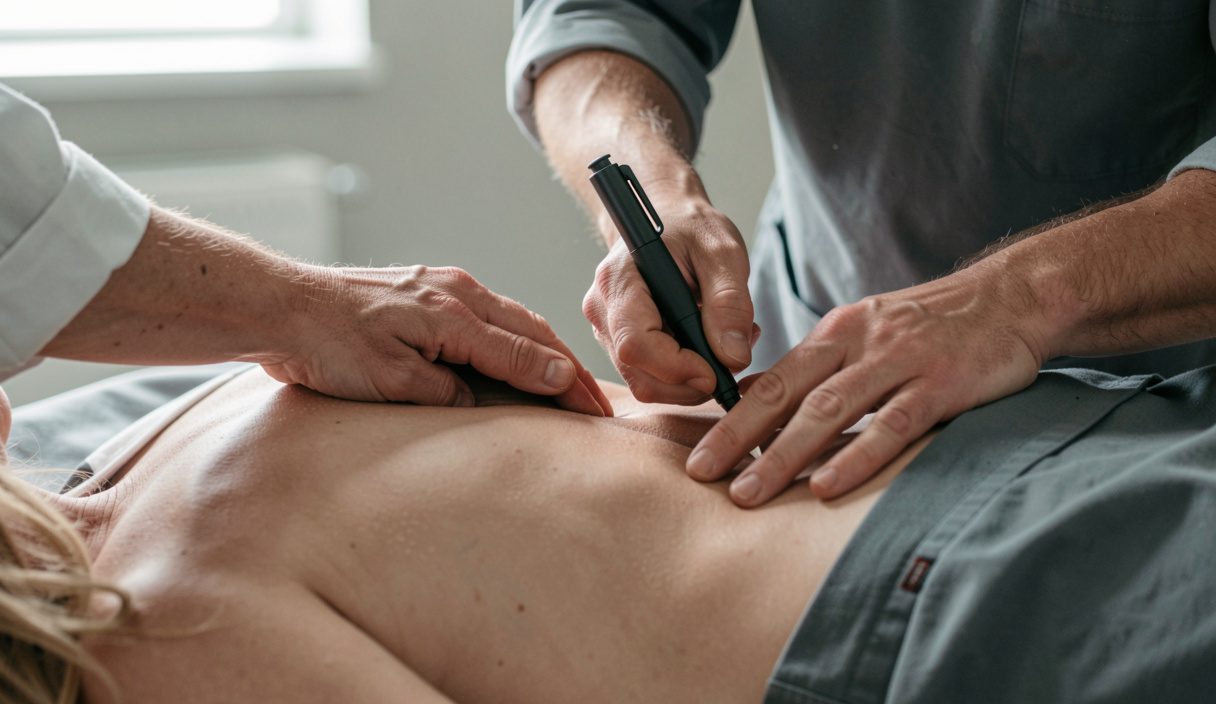
Osteopathy is a form of manual therapy: assessment and treatment carried out mostly with the hands, focused on muscles, joints, ligaments and the connective tissue that links them. A practitioner will typically look at how a person moves, feel for areas that are stiff, tender or guarded, and then use techniques such as soft tissue stretching, rhythmic joint articulation and, in some cases, a quick low amplitude thrust that produces the familiar click. Alongside the hands on work, most sessions include advice about movement, loading and daily habits, which is often the part that does the lasting work.
The hands on part is what people remember. The homework is usually what changes the following month.
Osteopathy grew out of a nineteenth century American school of thought with some ideas that have not aged well. Modern UK practice has moved a long way from that origin and sits much closer to mainstream musculoskeletal care, but the older vocabulary still surfaces on some clinic websites, which is one reason the subject confuses people.
What a first session usually involves
Appointments vary between practices, but the shape is fairly consistent across the UK.
- A case history. Not only the sore bit: general health, medication, previous injuries, sleep, work and activity. This is also the safety screen, and it is the reason a good practitioner asks questions that seem unrelated.
- An examination. Watching how someone stands, bends and turns, then feeling the area and often the regions above and below it. Some clothing usually needs to come off so the area can be seen properly. Patients can ask to wear shorts and a vest, and are entitled to bring someone with them.
- An explanation. What the practitioner thinks is going on, in language that makes sense, along with what can reasonably be expected and roughly how many sessions might be involved.
- Treatment and a plan. Hands on techniques, then exercises or activity changes to carry on with at home.
Mild soreness for a day or two afterwards is common and usually settles. Serious adverse events are rare, but techniques applied to the neck carry a small risk that a practitioner should raise and discuss before using them, and anyone is free to decline a particular technique.
A reasonable expectation
Any practitioner who promises a cure, insists on a long block of prepaid sessions before assessing you, or claims to treat conditions unrelated to the musculoskeletal system is worth walking away from. The Advertising Standards Authority takes a firm line on that last point, and UK osteopaths are broadly limited to advertising musculoskeletal claims.
What the evidence actually supports
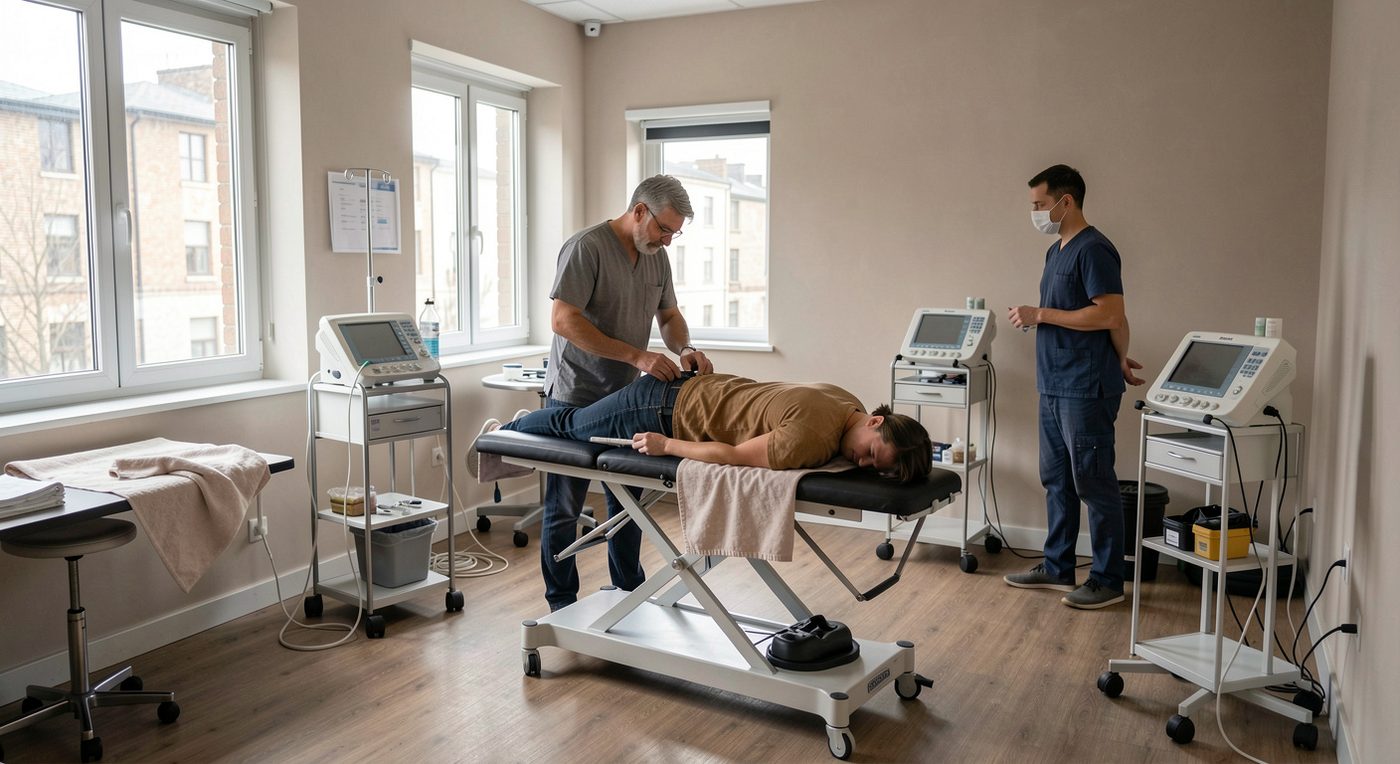
The honest summary is narrow but real. For persistent low back pain, the National Institute for Health and Care Excellence recommends that manual therapy, meaning spinal manipulation, mobilisation or soft tissue techniques such as massage, may be considered, but only as part of a package that includes exercise, with or without psychological therapy. Manual therapy on its own is not recommended as a standalone treatment.
That framing matters. It positions hands on work as something that can make movement more comfortable so that the active part becomes possible, rather than as a repair job carried out on a passive patient. Evidence for osteopathy in conditions outside the musculoskeletal system is weak or absent, which is precisely why advertising rules restrict what may be claimed.
Manual therapy buys comfort. Exercise and time do the rest of the work.
Training, regulation and the protected title
In the UK, osteopathy is regulated by statute under the Osteopaths Act 1993. The regulator is the General Osteopathic Council, usually shortened to the GOsC.
- Regulator
- General Osteopathic Council (GOsC), established under the Osteopaths Act 1993
- Title
- Protected in law. Using the title without registration is a criminal offence, not merely a professional matter
- Qualification
- A GOsC recognised degree, commonly four years full time or five part time, including well over 1,000 hours of supervised clinical practice
- Ongoing duties
- Annual registration, professional indemnity insurance, continuing professional development, and the Osteopathic Practice Standards
- Public register
- Searchable free of charge on the GOsC website, by name or by area
The protected title is the part most readers underestimate. Section 32 of the Act makes it an offence for a person who is not registered to describe themselves as an osteopath, or to use related descriptions that suggest they are. Similar arrangements cover chiropractors under the Chiropractors Act 1994, and physiotherapists through the Health and Care Professions Council. A great many other manual therapy titles carry no statutory protection at all, which is why checking a register is a two minute habit worth having.
How to check, in two minutes
Search the practitioner's full name on the GOsC public register at osteopathy.org.uk for an osteopath, on the HCPC register for a physiotherapist, or on the General Chiropractic Council register for a chiropractor. If a name does not appear, the sensible next step is to ask why before booking anything.
Osteopath, physiotherapist or chiropractor?
The overlap between the three is far larger than the marketing suggests, and the differences between two individual practitioners are often greater than the differences between their professions. As a rough orientation:
- Physiotherapy is the profession most embedded in the NHS, with the widest scope, from post surgical rehabilitation to respiratory care, and a strong emphasis on graded exercise.
- Osteopathy in the UK is mostly private, musculoskeletal, and tends to combine hands on treatment with movement advice across a whole region rather than a single joint.
- Chiropractic traditionally centres on spinal manipulation, though modern practice has broadened considerably.
All three are regulated, all three require insurance, and all three include practitioners who are excellent and practitioners who are not. A separate guide compares them in more detail.
Cost, and the question about the NHS
Osteopathy is available on the NHS in some parts of England, usually through musculoskeletal services, but availability is patchy and most people in the UK pay privately. A GP practice or a local first contact physiotherapy service is the right place to ask what exists in a given area.
Private fees are set by each practice and vary widely by region. Published price lists commonly sit somewhere between £40 and £80 for a follow up appointment, with a first appointment costing more because it lasts longer, and central London running higher than most of the country. Some private health insurance policies cover a course of treatment, often with a GP referral or a policy specific authorisation first.
When to see a GP first
Most back pain is not sinister and settles within weeks. A small number of symptoms are different, and they belong with a doctor rather than with any manual therapy.
- Numbness or tingling around the back passage, genitals or inner thighs.
- Difficulty passing urine, or loss of bladder or bowel control.
- Back pain with a fever, or with unexplained weight loss.
- Pain following a significant fall, accident or injury.
- Severe pain that is getting steadily worse, particularly at night.
- New back pain in someone with a history of cancer.
Do not wait on these
In the UK, contact a GP or call NHS 111 without delay if any of the above applies, and call 999 if symptoms are severe or come on suddenly. A registered practitioner of any discipline should refer someone on rather than treat them in these circumstances.
Common questions
Is osteopathy available on the NHS?
In some areas, yes, usually through musculoskeletal or physiotherapy services rather than as a standalone offer. Coverage is limited and varies by region, so the practical answer for most people is that treatment is paid for privately. A GP surgery can say what is commissioned locally.
Does a referral from a GP have to come first?
No. Osteopaths in the UK can be seen directly without a referral. Private health insurance is the usual exception, since many policies want a referral or prior authorisation before they will pay.
Is the clicking sound a bone going back into place?
No. The sound is generally understood to come from a rapid pressure change inside the joint rather than anything moving back into position, and treatment can be perfectly effective without any noise at all. Anyone who prefers to avoid those techniques can say so.
How many sessions are normal?
For a straightforward musculoskeletal problem, a small number is typical, with a review of progress along the way. Open ended plans that never reach a review point, or large packages sold before any assessment, are a reasonable prompt to ask questions.
Can anyone call themselves an osteopath?
Not in the United Kingdom. The title is protected under the Osteopaths Act 1993 and using it without GOsC registration is a criminal offence. The register is public, free to search and the quickest way to settle the question.
Titles matter everywhere; who holds which title in the Netherlands is a useful contrast.
Osteopathy looks at how the body moves and breathes as a whole, and that habit of noticing structure applies well beyond the clinic. Breathing support follows the same logic: the machinery has to suit the patient in front of it, whether that is a newborn, a child or an adult. The principles of gas flow, humidification and carbon dioxide removal do not change with size, only the scale and the settings do. A short guide to adult and neonatal circuits sets out those differences plainly, including why heated wires still collect condensation.